Focused detail pages are review boundaries
A list is good for scanning. A detail page is where a private workflow can gather context, resolve relationships, and make a narrow reviewed change without turning the whole app into an edit surface.
Yesterday's useful implementation pattern was not the fact that several private workflow routes were added. It was the sequence. A list of records became focused detail pages. Those detail pages learned to resolve related records into readable links. Only after that did a small review action belong on one focused surface.
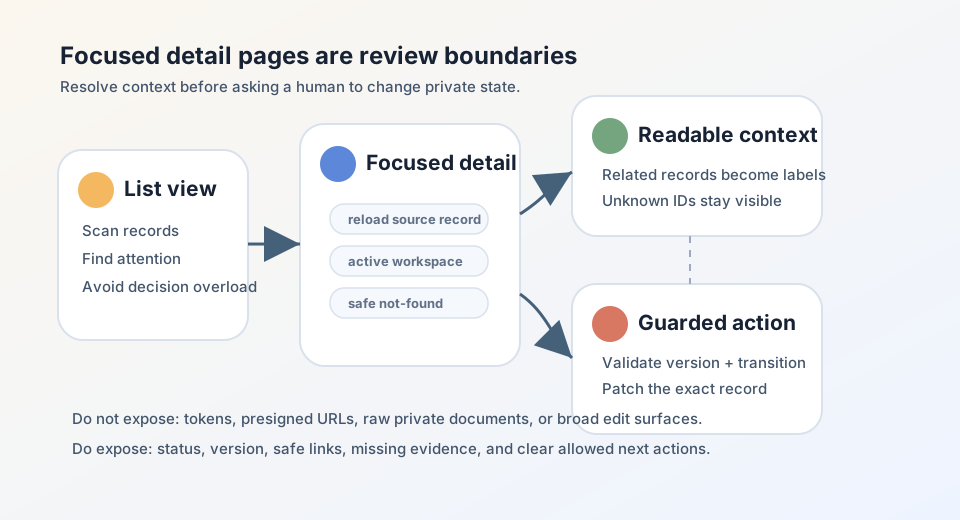
The public lesson is simple: in sensitive operational products, a detail page should become a boundary before it becomes an editor. It should prove what record is being viewed, where its relationships point, what evidence is missing, what version the human saw, and which transitions are actually allowed.
Lists are not enough for judgment
Tables are useful for orientation. They show what exists, what changed, and where attention might be needed. But a table row is a poor place to ask a human to make a decision. The context is compressed, related records are often hidden, and raw identifiers tend to leak into the interface because there is nowhere better to put meaning.
A focused detail page changes the product shape. It can reload the selected record from the active workspace, return a safe not-found state when the record is absent, and show the surrounding context: related company or entity, linked evidence, missing required documents, status, version, timestamps, and review notes.
Resolve relationships before adding actions
The first job of a detail page is not mutation. It is meaning. If a record points at another record, the page should resolve that relationship into a readable label and a protected link when the related record exists. If it cannot resolve the relationship, it should preserve the unresolved identifier explicitly instead of hiding it.
That rule matters for auditability. Unknown links are not UI noise. They are facts about the state of the system. A private workflow should help the operator distinguish “this relationship is known and navigable” from “this relationship is still unresolved,” without exposing temporary file URLs, raw private document text, tokens, or provider internals.
Then make the action narrow
Once a detail page can prove context, it becomes a good place for a small review action. The action should submit the record ID, the target status, and the version the user actually saw. The server should reload from the active workspace, validate the session, validate the transition through domain rules, and patch only the matching record.
That is different from making the page a general editor. A review boundary says: this specific record, from this workspace, at this displayed version, may move through this allowed transition. Anything else redirects, refuses, or asks the operator to refresh rather than leaking raw errors or silently overwriting state.
Keep authority separate
Not every status belongs to the same actor. An owner can confirm that a record is ready for review or mark that it needs a specialist. That does not mean the owner should be able to grant the specialist's approval state. When a product has accountant, reviewer, or administrator-only statuses, those transitions deserve their own authorization boundary.
Keeping authority separate makes the UI less magical. The page can show the current state and the next owner-visible actions while leaving stronger approvals for a later surface with the right role checks. It is better to ship a narrow honest boundary than a broad button that implies trust the server has not actually enforced.
The rule I am taking forward
For private workflows, detail pages are not just nicer navigation. They are where a product earns the right to let a human make a reviewed change.
Resolve first. Review second. Patch only what the boundary can prove.
That pattern fits financial registers, document review queues, approval tools, care workflows, and internal operations software. Start with focused pages that reload source records and explain relationships. Add readable links and unresolved fallbacks. Then add small, version-aware, role-aware actions that move the system forward without turning private state into a loose edit form.